


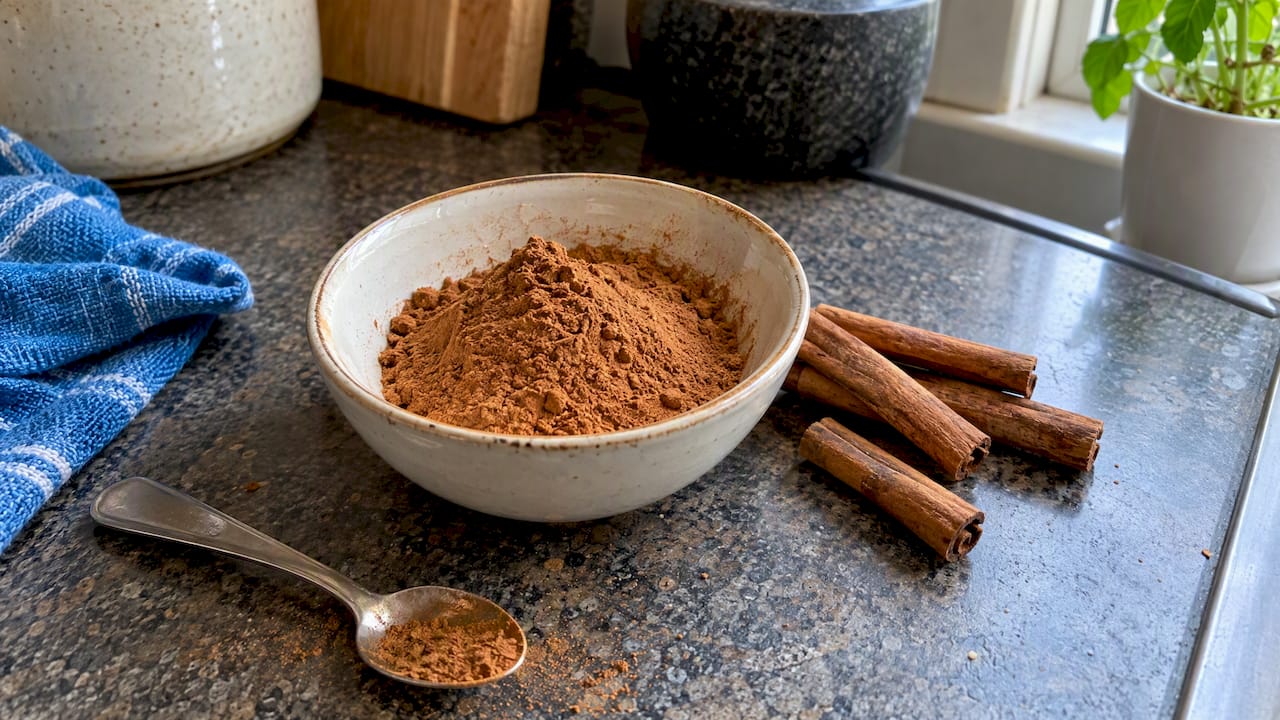
Cinnamon has lowered blood glucose modestly in some studies, but the results are inconsistent and it is not a proven treatment. A 2024 review of 28 trials found a pooled fasting glucose drop of about 15 mg/dL, yet its authors cautioned against firm conclusions. Cinnamon is no substitute for the care your clinician prescribes, so talk with your care team before trying any supplement.
TL;DR:
- Long term control changed little: a 2023 umbrella analysis found an HbA1c reduction of about 0.10 percentage points, while trial results varied widely.
- Trials used 0.5 to 6 g daily, but species and preparation varied, so no standard dose exists for over the counter supplements.
- Choose clearly labeled Ceylon and third party tested products, because Cassia contains more coumarin and FDA alerts have flagged lead in some ground cinnamon.
- If you take insulin or drugs that lower glucose, consult your clinician first and agree on closer monitoring, a trial period, and stopping criteria.
Table of Contents
- What does the research say about cinnamon and blood sugar?
- How might cinnamon work in the body?
- Ceylon or Cassia: which cinnamon is safer, and what should you watch for?
- How much cinnamon did trials use, and how does it compare with the spice rack?
- What do health authorities say, and could cinnamon interact with your medications?
- How can you try cinnamon safely, step by step?
- My take: cautious optimism and a conversation with your clinician
- Your next step with Celluvive for metabolic support
- FAQ
- Sources
What does the research say about cinnamon and blood sugar?
The headline number comes from a 2024 systematic review of 28 trials in people with type 2 diabetes. It reported a pooled reduction in fasting blood glucose of about 15.26 mg/dL. That sounds encouraging, and it is. But the same review concluded that the differences between trials prevent a firm consensus on whether cinnamon works in clinical practice.
Pooled fasting blood glucose reduction of about -15.26 mg/dL across 28 trials, with high heterogeneity that limits definitive conclusions. In plain terms, the average result leans positive, but the trials disagree with each other too much to call it settled.
Other meta-analyses tell a quieter story about long-term control. A 2023 umbrella meta-analysis, as summarized in the 2024 review’s data, found an HbA1c change of only about 0.10 percentage points. That is a very small shift in a measure clinicians use to track average glucose over time.
Individual trials point in different directions, which is part of why the picture stays blurry:
- A 2013 randomized controlled trial gave people with type 2 diabetes 1 g of Cinnamomum cassia daily for 30 to 60 days and reported no effect on glucose.
- A 2019 randomized trial tested different amounts of cinnamon in healthy adults and found that serum glucose changes varied by dose group, which shows that dose and population both shape the outcome.
- Several reviews from 2019 to 2020, as NCCIH summarizes, found reduced fasting glucose and improved lipids, while higher-quality, longer trials, especially in Western populations, showed less prominent effects.
- Doses of 2 g per day or less may work better for certain glycemic measures, though the heterogeneity across studies keeps that finding tentative.
Why the results disagree
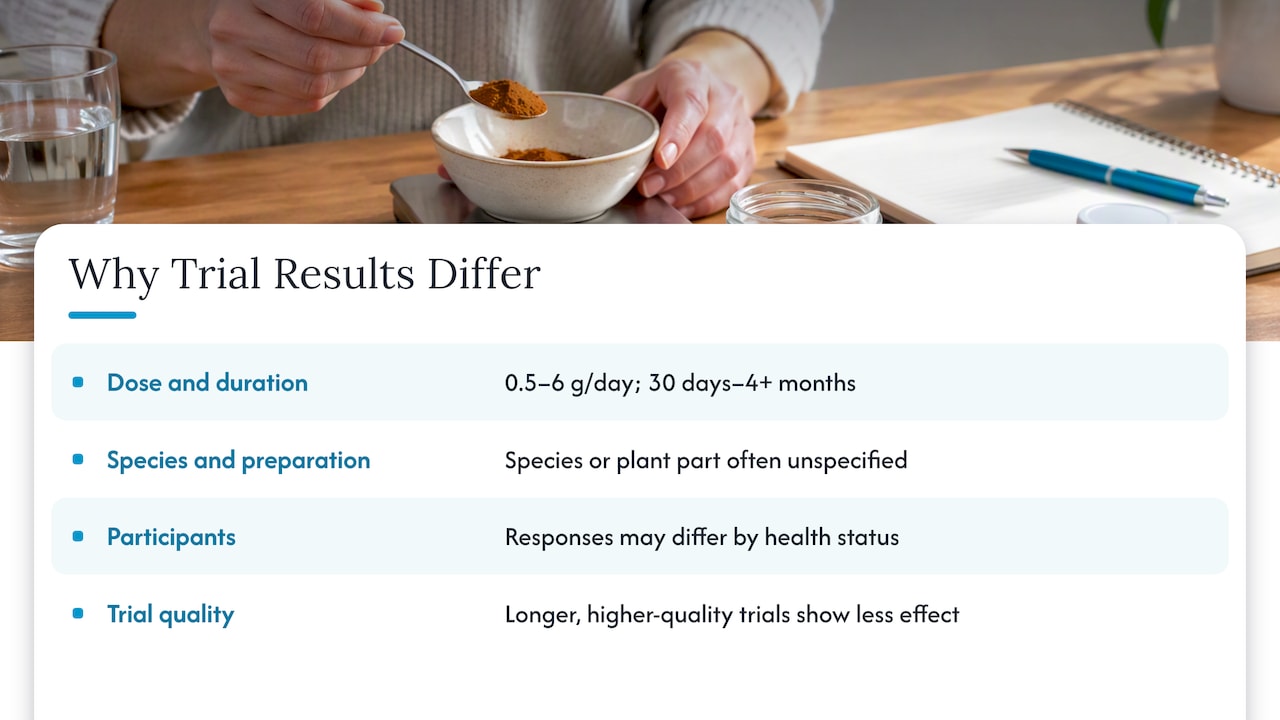
Four things drive most of the mixed results. First, doses ranged from 0.5 to 6 g per day, and durations ran from 30 days to four months or more. Trials of different durations may measure different things.
Second, researchers often do not say which cinnamon they used. NCCIH notes that most clinical research does not clearly specify the species or plant part being tested. Cassia, Ceylon, bark powder and concentrated extract can behave very differently, so comparing results across studies is difficult.
Third, the people studied differ. Someone with prediabetes, someone with long-standing type 2 diabetes, and a healthy adult may respond differently to the same dose. Fourth, trial quality varies. Higher-quality, longer trials have shown less prominent effects.
The honest reading: cinnamon is a plausible, low-cost candidate that has earned more research, not a proven tool you can count on.
How might cinnamon work in the body?
Researchers have proposed several pathways, and understanding the insulin response to snacks can provide important context for how cinnamon might affect metabolic health. A review of cinnamon’s mechanisms suggests it may influence blood sugar by enhancing glucose uptake, increasing insulin sensitivity, slowing gastric emptying and blocking some glucose absorption. The leading ideas are:
- Greater insulin sensitivity: compounds in cinnamon may help cells respond better to insulin, so less insulin is needed to move glucose out of the blood.
- Improved glucose uptake: cinnamon may influence how the body takes up glucose.
- Slower gastric emptying: if food leaves the stomach more slowly, glucose enters the bloodstream more gradually after a meal.
Plausible is not the same as proven
Much of this evidence comes from cell studies and animal experiments. Those settings use controlled doses and isolated compounds, which do not match a person eating a spoonful of spice or swallowing a capsule. In people, the clinical results have been modest and inconsistent, as the trials above show.
A believable mechanism is a reason to keep studying cinnamon. It is not a reason to expect a meaningful, lasting benefit for you. Until larger, better-designed human trials use a specified species and a standard preparation, the mechanisms stay a promising explanation looking for stronger clinical proof.
Ceylon or Cassia: which cinnamon is safer, and what should you watch for?
Ceylon and Cassia cinnamon are two commonly discussed types. Ceylon (Cinnamomum verum) generally contains only trace amounts of coumarin. Cassia (Cinnamomum cassia) contains significantly more, and Healthline’s comparison notes that this can risk liver damage in sensitive people or with prolonged high-dose intake. Most commercial cinnamon is Cassia, and labels often leave out the species.
Cinnamon is generally safe in culinary amounts, and therapeutic doses below 6 g per day appear not to pose significant risks for most people, but high-dose or long-term Cassia intake may stress the liver.
Lead in ground cinnamon
Product quality matters as much as species. In 2024 the FDA issued an alert about elevated lead levels in several ground cinnamon products and recommended recalls. Prolonged exposure to contaminated cinnamon could raise blood lead levels. A voluntary recall by Colonna Brothers showed that contaminated retail products reached shelves nationwide. Supplements are not standardized the way medications are, which makes reputable, tested sourcing essential.
Side effects and who should be careful
Trials and safety summaries point to a short list of concerns:
- Digestive upset, including stomach discomfort or nausea
- Allergic reactions, which can range from mouth irritation to a rash
- Possible liver stress with high or long-term Cassia intake
- Extra caution for anyone with liver disease, who should generally avoid cinnamon supplements
Choosing a safer product
- Prefer Ceylon for regular use when you can find it labeled clearly.
- Look for third-party testing for heavy metals and contaminants.
- Skip any brand or batch that appears in FDA alerts or recalls.
- Check the label for species. If it only says “cinnamon,” assume Cassia.
Pro Tip: Before you buy, search the FDA’s recall and alert pages for the brand name and lot number. This can help you check for known product alerts.
How much cinnamon did trials use, and how does it compare with the spice rack?
Trials used a wide range of 0.5 g to 6 g per day, with many clustering around 1 g daily. Durations ran from 30 days to four months or more. No standardized therapeutic dose has been established, so there is no number you can safely call “the right amount.”
The form matters nearly as much as the quantity:
- Whole ground cinnamon: the culinary spice, with variable potency depending on species, age and freshness.
- Concentrated extracts: processing can increase some compounds and reduce others, such as coumarin, so a gram of extract is not a gram of spice.
- Standardized supplements: these aim for consistent levels of specific compounds, but standards differ from one manufacturer to the next.
A teaspoon of ground cinnamon weighs roughly 2 to 3 g in typical cooking references, so a sprinkle on oatmeal or yogurt delivers far less than a trial dose. That is useful context. Cinnamon in typical culinary amounts is generally safe, but it is not equivalent to the amounts studied and should not be expected to deliver trial-style results.
Because extraction and standardization change the active compound levels, copying a dose from a study onto an over-the-counter product is guesswork. If you want to try a higher amount, work with your clinician on a starting dose, a monitoring plan and a stopping point, rather than raising the dose on your own.
What do health authorities say, and could cinnamon interact with your medications?
The American Diabetes Association states that supplements are not proven to replace standard diabetes care and that people should discuss them with their healthcare team because of possible interactions. ADA guidance also stresses weighing modest promise against safety risks, and favors getting nutrients from food over pills when possible.
NCCIH takes a similar line. It points out that the lack of clarity about species and formulation makes cinnamon research hard to interpret, even though the spice has a long history of traditional use for metabolic health.
What this means for you:
- Treat cinnamon as an add-on to your treatment plan, never a replacement for medication, nutrition guidance or monitoring.
- Tell your clinician and pharmacist about every supplement you take, including spices used in large amounts.
- If you take insulin or other glucose-lowering drugs, a glucose-lowering supplement could add to their effect and raise the chance of low blood sugar.
- Expect your clinician to suggest tighter glucose monitoring during any trial period, and possibly a medication adjustment if your numbers drop.
How can you try cinnamon safely, step by step?
If you and your clinician decide a trial makes sense, a short, structured test beats open-ended experimenting.
- Talk with your clinician first. Share your goal and ask whether cinnamon is appropriate for you.
- Review your medications. Ask about interactions, especially with insulin or other glucose-lowering drugs.
- Choose a product carefully. Prefer Ceylon and third-party tested options, and confirm the brand is not on an FDA alert.
- Set a trial window. Agree on a suitable period with your clinician, along with targets for fasting glucose and a timeline for any HbA1c recheck.
- Monitor and log. Check glucose as often as your clinician advises, and record readings alongside the dose.
- Review the results together. Keep it only if your numbers and your clinician support it.
Know the warning signs. Symptoms of low blood sugar include shakiness, sweating, confusion and a racing heart. Stop and call your clinician for unexplained yellowing of the skin or eyes, dark urine, severe stomach symptoms or any allergic reaction. If you have known liver disease, skip cinnamon supplements entirely.
Pro Tip: Change only one thing at a time. If you start cinnamon the same week you change your diet or medication, you will not know what moved your numbers.
My take: cautious optimism and a conversation with your clinician
Cinnamon is a good example of a topic where the headline is more exciting than the data. Some people may see a small benefit, but product quality and dose can affect the risks. The evidence is inconsistent, and the biggest dangers, such as contaminated products and unplanned interactions, come from doing this alone.
My advice is to treat any cinnamon trial like a small experiment you run with your care team: a clear goal, a defined window, measurements you agree on and a plan for what happens next. Bring the questions in this article to your next appointment. If you want help figuring out where cinnamon fits, our free health assessment and consultation is one place to start a more personal conversation.
— Derrick
Your next step with Celluvive for metabolic support

If you want guidance that goes beyond a general article, we can help you sort out what fits your situation. Our free health assessment and personalized consultation give you a starting point to talk through whether cinnamon or another supplement belongs in your plan. Here is what you can use right now:
- Free health assessment and consultation: a personalized look at your goals before you buy anything
- Health supplements: a category of products we offer for daily and metabolic support
- Membership options: ongoing support, with plans such as Wellness Pro at $49 per month, listed on our membership page
Start with the free assessment, then browse our health supplements when you are ready. Join our health revolution one informed step at a time.
FAQ
Is cinnamon as good as metformin for blood sugar?
No. Cinnamon has shown small, inconsistent effects, and it is not a substitute for prescribed medication such as metformin. The American Diabetes Association states that supplements are not proven to replace standard diabetes care. Never stop or swap a prescribed medication without your clinician.
What are the side effects of taking cinnamon for diabetes?
Reported concerns include digestive upset and allergic reactions. High or long-term intake of Cassia cinnamon may stress the liver because of its coumarin content. If you have liver disease, discuss cinnamon supplements with your healthcare team before using them. Cinnamon supplements may interact with diabetes medications, so review their use with your healthcare team.
Which is better for diabetes, turmeric or cinnamon?
Neither is proven as a treatment, and we have no head-to-head evidence in this article’s sources to rank them. Both are supplements the American Diabetes Association says should be discussed with your healthcare team before use. A clinician can help you decide whether either fits your plan.
What is the “cinnamon trick” for type 2 diabetes?
The popular version suggests stirring cinnamon into food or drinks to lower blood sugar. Research shows modest and inconsistent effects, and a 2024 review of 28 trials found too much variation to recommend it as a fix. Treat it as a possible add-on, not a trick that replaces your care plan.
Sources
- Effects of cinnamon supplementation on metabolic biomarkers in individuals with type 2 diabetes: a systematic review and meta-analysis
- Vitamins & Supplements for Diabetes | ADA
- FDA Alert Concerning Certain Cinnamon Products Due to Presence of Elevated Levels of Lead | FDA