



The afternoon slump is a normal circadian dip, often amplified by too little sleep or a high-glycemic lunch, and the fastest relief comes from a few minutes of movement or bright light, a glass of water, and a small protein-rich snack. These simple moves restore alertness within minutes, while better sleep and meal habits keep the dip from returning day after day.
TL;DR:
- Combine a 5 to 10 minute walk with a protein and fiber snack, or use 10 to 20 minutes of bright light.
- Most healthy adults can consume up to 400 mg of caffeine daily, but keep the final dose at least six hours before bedtime.
- Choose lunches with protein, fiber, and healthy fats, and eat at least an hour before demanding afternoon work so digestion does not compete for energy.
- Persistent exhaustion, loud snoring or breathing pauses, and worsening memory problems warrant a medical conversation, especially when ordinary tactics do not improve daytime sleepiness.
- Treat supplements as support rather than a replacement for sleep, movement, and balanced meals, and choose ingredients that address a specific gap.
Table of Contents
- 1. Quick Fixes You Can Try in the Next 20 Minutes
- 2. Build Lunches and Snacks That Won’t Crash Your Energy
- 3. Use Caffeine and Water Strategically, Not Just Reactively
- 4. What Science Says About Light, Movement, and Naps
- 5. When the Slump Signals a Bigger Sleep Problem
- 6. Personalized Support Through Celluvive
- 7. How Chronic Conditions Like Diabetes or Thyroid Disorders Affect Afternoon Energy
- 8. Why Mood and Mental Health Shape Your Midday Energy
- 9. How Supplements Can Support the Habits You’re Already Building
- 10. When and How to Choose a Daytime Energy Supplement
- A Realistic Way to Test What Actually Works for You
- Your Next Step Toward Steadier Afternoon Energy
- FAQ
- Sources
1. Quick Fixes You Can Try in the Next 20 Minutes
When your focus starts slipping around 2 p.m., you don’t need a dramatic fix. You need the right small action, done in the right order.
- Take a brisk 5 to 10 minute walk or do a standing stretch routine at your desk to get blood moving and wake up your nervous system.
- Step into bright light, ideally outdoors, or sit near a blue-enriched light source for 10 to 20 minutes if you can’t get outside.
- Sip water steadily rather than chugging a large glass, since mild dehydration can feel a lot like plain fatigue.
- Try a caffeine micro-dose of 50 to 100 mg, roughly the amount in a small coffee or green tea, timed before 2 p.m. so it doesn’t linger into your evening.
- Take a 10 to 20 minute nap if you have the privacy to do so, setting an alarm to avoid the grogginess of a longer sleep cycle.
- Eat a balanced snack that pairs protein with fiber, like Greek yogurt with berries or an apple with almond butter, to keep your blood sugar steady.
Pro Tip: Stack two tactics at once, like a short walk followed by your snack, since movement and food both work faster together than either does alone.
2. Build Lunches and Snacks That Won’t Crash Your Energy
A lunch loaded with refined carbohydrates, think white bread, soda, or a sugary pastry, spikes your blood sugar quickly and then drops it just as fast, leaving you foggy by 2 p.m. Building your midday meal around protein, fiber, and healthy fats slows that digestion curve and keeps your energy on a flatter, steadier line through the afternoon.
Aim for a balanced amount of protein and fiber at lunch, and try to eat at least an hour before your most demanding afternoon task so your body isn’t diverting energy to digestion during a big presentation or deep-focus work block.
- A grain bowl with grilled chicken, quinoa, chickpeas, and leafy greens.
- A turkey and avocado wrap on a whole-grain tortilla with a side salad.
- Portable snacks like hummus with vegetables, a handful of nuts, or cottage cheese with fruit.
For a deeper look at building meals that prevent the crash altogether, our guide on preventing an energy crash after lunch walks through meal timing in more detail.
3. Use Caffeine and Water Strategically, Not Just Reactively
Caffeine works, but how and when you use it matters as much as how much you drink. The FDA notes that most healthy adults can handle up to 400 mg of caffeine a day, roughly the amount in four cups of coffee, though individual sensitivity varies widely and too much can disrupt sleep later that night.
The FDA’s 400 mg daily guideline gives most adults room for a morning coffee and an afternoon tea without tipping into overstimulation, as long as the later dose stays well clear of bedtime.
- Keep your last caffeine intake at least 6 hours before you plan to sleep.
- Drink a glass of water at the top of every hour instead of waiting until you feel thirsty.
- Be cautious with energy drinks, since their high stimulant load can trigger a sharper crash once it wears off, according to hydration and energy guidance from Franciscan Health.
- Favor whole foods with natural water content, like cucumbers or oranges, as a gentle hydration boost alongside plain water.
4. What Science Says About Light, Movement, and Naps
Your afternoon dip isn’t random. Sleep researchers describe it through a two-process model, where your body’s sleep drive and your internal circadian clock combine to produce a predictable rise in sleepiness in the early afternoon, as outlined in modeling research on sleep propensity. Separate clinical research on bright light found that exposure to blue-enriched white light around 1,000 lux and 6,500 K in the early afternoon reduced subjective sleepiness and improved some working-memory scores compared to normal indoor lighting, an effect confirmed in earlier lab studies as well.
- Get 10 to 20 minutes of bright, blue-enriched light between 1 and 3 p.m., using a light box if natural daylight isn’t an option.
- Take a short walk outdoors if you can, combining light exposure with movement for a stronger combined effect.
- Nap for 10 to 20 minutes, setting an alarm and standing up immediately when it goes off to shake off any grogginess, a protocol Harvard Health recommends to avoid the deeper sleep inertia of longer naps.
- Schedule low-focus tasks like email or filing during your natural 1 to 3 p.m. dip, and save demanding work for times when your alertness runs higher.
Pro Tip: If you’re a habitual napper, the bright-light effect tends to be even stronger for you, so pair a short walk in daylight with your nap routine rather than choosing one or the other.
5. When the Slump Signals a Bigger Sleep Problem
Most afternoon dips trace back to ordinary sleep debt. A 2024 CDC report found that about 30.5% of adults get less than the recommended 7 hours of sleep a night, which means your afternoon fog may simply reflect a pattern that’s common and fixable with better sleep habits.
Some signs point to something that needs a closer look, though.
- Daytime sleepiness that movement, light, or napping doesn’t touch.
- Loud snoring or pauses in breathing that a partner has noticed.
- Trouble concentrating or remembering things that feels new or worsening.
- Waking up still feeling exhausted no matter how early you went to bed.
A simple sleep log for a week or two can reveal patterns worth sharing with your doctor. If any of these red flags sound familiar, a conversation with your primary care provider or a sleep specialist is a better next step than trying to push through with more coffee.
6. Personalized Support Through Celluvive
Behavioral tweaks go a long way, and a personalized plan can help you figure out which ones matter most for your body. A free health assessment can help you evaluate your current habits, energy patterns, and goals, then guide you toward supplements and lifestyle adjustments tailored to your situation rather than a one-size-fits-all list.
Our Health Supplements line includes options formulated to support energy, cognitive focus, and metabolic health, designed to work alongside the movement, light, meal, and sleep habits covered above rather than replace them. The approach combines scientifically researched formulations with personalized consultations to create plans that reflect individual energy patterns rather than generic fixes.
7. How Chronic Conditions Like Diabetes or Thyroid Disorders Affect Afternoon Energy
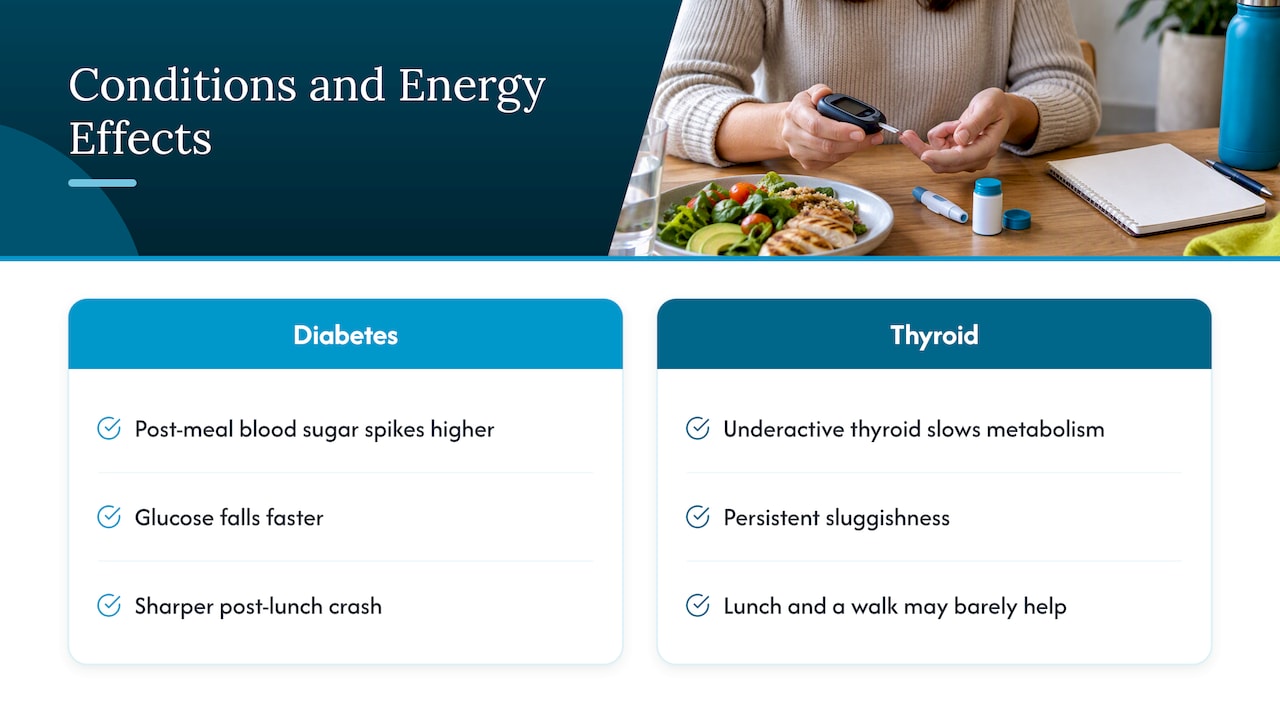
If your afternoon crash feels more severe than a typical dip, or if it comes with other symptoms, an underlying condition could be part of the picture. Diabetes and prediabetes can cause sharper blood sugar swings after meals, since impaired insulin response lets glucose spike higher and then fall faster than it would in someone without the condition, often intensifying the post-lunch crash well beyond what diet alone explains.
Thyroid disorders work differently but produce a similar result. An underactive thyroid slows your metabolism overall, which can leave you feeling persistently sluggish, including during the specific window when your circadian dip already has you running low. Someone with hypothyroidism might notice that even a well-balanced lunch and a short walk barely move the needle on their energy.
These patterns are worth mentioning to your doctor rather than managing alone, especially if fatigue shows up alongside other symptoms like unexplained weight changes, excessive thirst, or persistent cold sensitivity. A basic blood panel can rule in or out conditions that general energy tactics won’t fix on their own, and getting a diagnosis opens the door to treatment that addresses the actual cause instead of just the afternoon symptom.
8. Why Mood and Mental Health Shape Your Midday Energy
Energy and mood share more biology than most people realize. Low mood, anxiety, and chronic stress all tax the same nervous system resources that regulate alertness, so a stressful morning or an unresolved worry can leave you feeling drained by early afternoon even if your sleep and meals were solid.
Depression in particular often shows up as fatigue before it shows up as sadness, and that fatigue tends to cluster at predictable low points in the day, including the early afternoon window when your circadian rhythm already dips. Chronic stress adds another layer, since sustained cortisol elevation can disrupt the normal rhythm of alertness your body relies on to stay sharp through the day.
If your energy dip comes paired with low motivation, trouble concentrating that goes beyond the usual afternoon fog, or a flat mood that lingers most days, it’s worth treating that as its own signal rather than folding it into general tiredness. A conversation with a therapist or primary care provider can help sort out whether mood, rather than sleep or diet, is the bigger driver behind your slump.
9. How Supplements Can Support the Habits You’re Already Building
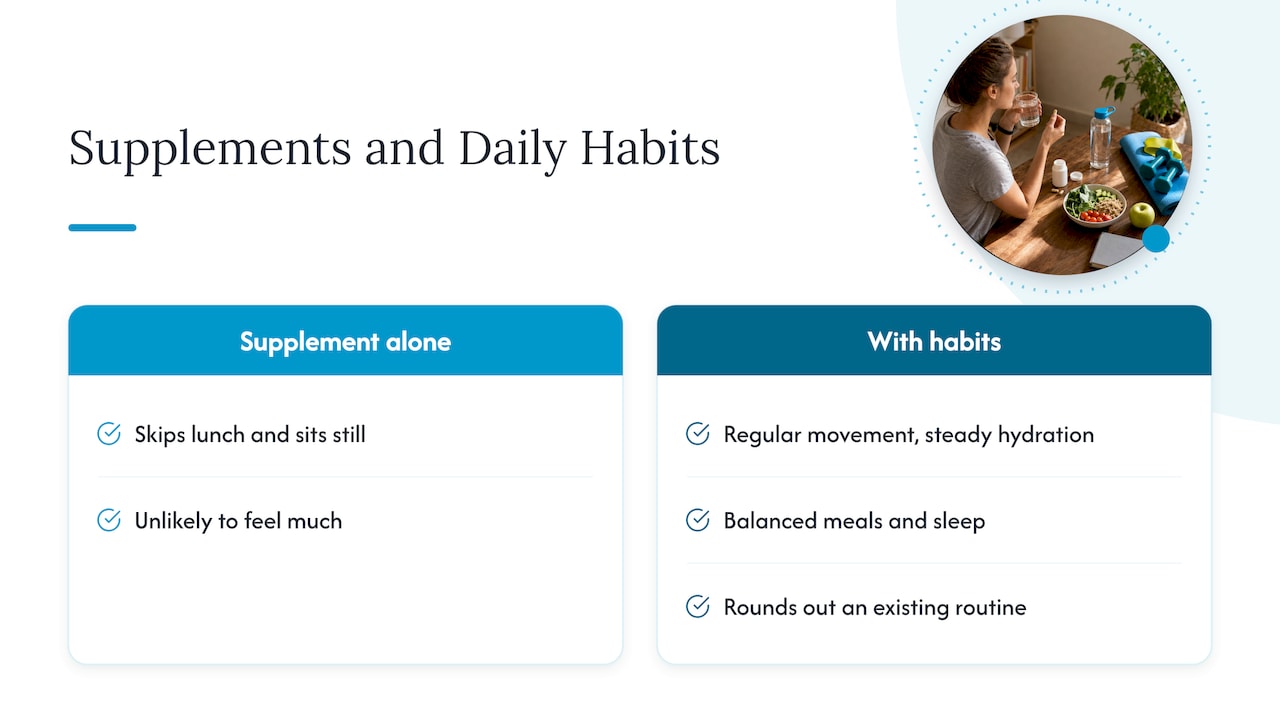
Supplements work best as reinforcement, not as a substitute for the sleep, movement, and meal habits that address the root causes of your afternoon dip. Someone who skips lunch and sits still all day is unlikely to feel much from a supplement alone, but the same product can meaningfully round out a routine that already includes regular movement, steady hydration, and balanced meals.
Our B vitamins for energy production guide explains how specific nutrients support the cellular processes behind sustained energy, which is the kind of detail worth understanding before you add anything to your routine. The goal is to close gaps your diet and habits might be missing, whether that’s a nutrient you’re not getting enough of or extra support during a particularly demanding stretch of work or life.
Pairing a supplement with the free assessment lets you target what your body actually needs instead of guessing, since a generic multivitamin might address a completely different gap than the one causing your specific 2 p.m. crash.
10. When and How to Choose a Daytime Energy Supplement
Timing matters almost as much as the supplement itself. Anything intended to support alertness is generally most useful earlier in the day, so it has time to work with your natural rhythm instead of interfering with sleep that night, similar to the caffeine timing guidance covered earlier in this article.
Look for formulations that name their ingredients clearly and match an actual gap in your routine, whether that’s cognitive focus, metabolic support, or general vitality, rather than a vague “energy” label with no specifics behind it. Our Health Supplements category organizes options by the kind of support they’re designed for, which makes it easier to match a product to your specific afternoon pattern instead of picking blind.
A free assessment is the simplest starting point if you’re unsure where to begin, since it looks at your actual habits and goals before pointing you toward a specific product category.
A Realistic Way to Test What Actually Works for You
Pick one or two tactics from this list, like the short walk plus snack combo or the 10-minute nap, and try them consistently for a week while you track how alert you feel each afternoon. Everyone’s slump responds a little differently, so pay attention to what actually moves your energy rather than what’s supposed to work on paper. If red flags like loud snoring or persistent exhaustion show up along the way, loop in your doctor, and if you want a more guided starting point, our free assessment can help you build a plan around what you find.
— Derrick
Your Next Step Toward Steadier Afternoon Energy
Small, consistent changes add up faster when you know which ones fit your body, and that’s exactly what our free health assessment is built to help you figure out. We combine that assessment with a genuine commitment to community health, since every purchase helps fund wellness initiatives for underserved populations alongside your own results.

- Start with our free health assessment and consultation to get a plan built around your actual energy patterns.
- Browse our Health Supplements category for options that support energy, focus, and metabolic health.
- Explore membership options like Wellness Pro at $49 per month, or one-time programs including Essential Wellness at $150, through our VIP membership page for ongoing, personalized support.
FAQ
What causes the afternoon slump?
The afternoon slump comes from a natural circadian dip in alertness that overlaps with a buildup of sleep drive throughout the day, a pattern described by two-process sleep models. It’s often made worse by insufficient nighttime sleep or a lunch heavy in refined carbohydrates.
How do I get rid of the 3 p.m. slump?
A short walk, a few minutes of bright light, a glass of water, and a protein-and-fiber snack together address most of the common causes within 20 minutes. For a longer-lasting fix, build lunches around protein and fiber and keep your sleep schedule consistent.
Why do I crash so hard at 2 p.m.?
A sharp crash at 2 p.m. often points to a high-glycemic lunch causing a blood sugar spike and drop, layered on top of the natural circadian dip that peaks in the early afternoon. Chronic sleep debt, which CDC data shows affects about 30.5% of adults, can intensify the crash further.
What is an afternoon slump exactly?
An afternoon slump is the predictable dip in alertness and focus that most people experience in the early afternoon, driven by the overlap of circadian rhythm and accumulated sleep pressure. It typically peaks between 1 and 3 p.m. and can be worsened by poor sleep, dehydration, or a carbohydrate-heavy lunch.
Can supplements help with the afternoon slump?
Supplements can support energy alongside good sleep, movement, and meal habits, though they work best as a complement rather than a replacement for those habits. A personalized assessment can help identify which nutrients or formulations fit your specific pattern.
Sources
- Bright light exposure effects on post-lunch dip
- Spilling the Beans: How Much Caffeine Is Too Much? | FDA
- Short Sleep Duration and Sleep Difficulties Among Adults: United States, 2024
- Modeling napping, post-lunch dip, and other variations in human sleep propensity