



Berberine most reliably improves blood-sugar control and several lipid markers in clinical trials, typically at doses of 0.9 to 1.5 grams per day. The caveat matters just as much as the promise: berberine interacts with common medications and carries clear warnings against use in pregnancy and breastfeeding. If you’re weighing it as part of your wellness routine, the details below will help you make a grounded, personalized decision.
TL;DR:
- An overview of 54 systematic reviews rated most reviews low or very low quality, while geographically concentrated trials limit confidence in the glucose findings.
- Take the common trial dose with meals in two or three divided doses; berberine hydrochloride is the form used in most cited research.
- Berberine raised cyclosporine exposure by roughly 34.5% in small studies, and its effect on metformin levels varies, so review prescriptions with a clinician.
- Weight and BMI changes are generally modest, and studies lasting 90 days or less often reported larger LDL and HDL changes than longer trials.
- Diarrhea, cramping, and constipation are the most commonly reported side effects, and clinicians generally advise stopping berberine before scheduled surgery.
Table of Contents
- What Berberine Is and How It Works
- Evidence for Blood Sugar and Type 2 Diabetes
- Evidence for Lipids and Cardiovascular Markers
- Evidence for Weight, BMI, and Fatty Liver
- Safety, Side Effects, and Drug Interactions
- Dosage, Forms, and What to Look for on a Label
- Who Should Consider Berberine, and What to Do First
- Beyond Cholesterol: Blood Pressure and Inflammation
- How Berberine Affects Gut Health and the Microbiome
- Berberine’s Impact on Mental Health and Cognitive Function
- How Berberine Compares to Other Metabolic Health Supplements
- Fitting Berberine Into a Broader Wellness Plan
- Long-Term Use: What Sustainability Looks Like
- Where the Evidence Is Strong, and Where It Isn’t
- Getting Personalized Support From Celluvive
- FAQ
- Sources
What Berberine Is and How It Works
Berberine is a yellow isoquinoline alkaloid found in plants like Berberis and Coptis species, long used in traditional preparations and now studied for metabolic health. Its modern appeal rests on a few specific mechanisms rather than vague “detox” claims.
- AMPK activation: Berberine switches on AMP-activated protein kinase, a cellular energy sensor tied to glucose uptake and fat metabolism, according to a comprehensive review of its biological and pharmacological effects.
- Gut microbiota modulation: The same review describes shifts in gut bacterial populations that may influence metabolic signaling.
- Lipid and glucose pathway effects: Researchers link berberine to improved insulin sensitivity and changes in how the liver handles fat and cholesterol.
One practical wrinkle: berberine has low oral bioavailability, meaning only a fraction of what you swallow gets absorbed. This is part of why formulation and dose consistency change how much benefit you actually experience.
Evidence for Blood Sugar and Type 2 Diabetes
This is where berberine’s research base is strongest. analysis](https://examine.com/research-feed/study/9kjZm0/).
That’s a clinically meaningful drop. For context, many prescription diabetes medications aim for HbA1c reductions in a similar range, which is why this finding gets attention even though berberine is a supplement, not a drug.
A few things temper the enthusiasm:
- Trial dosing commonly fell between 0.9 and 1.5 grams per day, split across two or three doses.
- Much of the underlying research comes from trials concentrated in specific regions, which limits how confidently the results generalize.
- An overview of 54 systematic reviews found that most of those reviews were rated low or very low quality by AMSTAR-2 standards, even when outcomes looked favorable.
The takeaway: berberine shows a real glucose-lowering signal, but it’s a signal built on trials that need replication with more rigorous design before the effect size should be treated as settled.
Evidence for Lipids and Cardiovascular Markers
Berberine’s second-strongest evidence base covers cholesterol and triglycerides. A synthesis of metabolic syndrome trials reported weighted mean reductions of 0.367 mmol/L in triglycerides and 3.27 centimeters in waist circumference, alongside measurable drops in LDL-C and total cholesterol, per a meta-analysis in Frontiers in Pharmacology.
Timing shapes the picture, too:
- Shorter trials, those lasting 90 days or less, tended to show larger LDL-C and HDL-C changes than longer studies.
- This pattern shows up across multiple syntheses, suggesting either an early-response effect or that longer trials introduce more variability.
- Fasting plasma glucose also improved alongside lipid changes, with a reported reduction of 0.515 mmol/L in the same analysis.
None of this means berberine replaces a statin or a cardiologist’s treatment plan. It means the lipid changes are real enough, and consistent enough across studies, to matter for someone managing borderline cholesterol as part of a broader metabolic strategy.
Evidence for Weight, BMI, and Fatty Liver
Berberine is not a weight-loss drug, and the data backs up that modest framing. Meta-analyses tracking metabolic syndrome components found measurable but small reductions in waist circumference alongside the lipid and glucose improvements already noted.
- Weight and BMI changes reported across trials tend to be modest, not dramatic.
- NAFLD-focused studies note improvements in markers tied to hepatic fat and liver enzymes, according to the comprehensive review of berberine’s health effects.
- Researchers caution that bioavailability issues and trial heterogeneity limit how far these findings generalize to everyday use.
If you’re picturing berberine as a GLP-1-style weight-loss shortcut, recalibrate. It behaves more like a metabolic support tool than a fat-loss accelerant, and our berberine for weight loss comparison walks through realistic expectations in more depth.
Safety, Side Effects, and Drug Interactions
Most people who try berberine experience it as a digestive, not a dangerous, supplement. Gastrointestinal effects such as diarrhea, cramping, and constipation show up most often in trials and reviews.
The bigger safety conversation is interactions. A 2026 narrative review on berberine-drug interactions describes berberine as pharmacologically active enough to be treated like a drug during medication reconciliation. It inhibits liver enzymes including CYP3A4, CYP2D6, and CYP2C9, and it affects transporters like P-glycoprotein and OCT/MATE.
Here’s what that means in practice:
- Cyclosporine levels can rise. Small studies documented roughly a 34.5% increase in cyclosporine exposure when combined with berberine.
- Metformin exposure can shift. Because berberine affects OCT/MATE transporters involved in both absorption and kidney elimination, the net effect on metformin levels depends on where that transporter activity matters most.
- Surgery timing matters. Clinicians generally advise stopping berberine before scheduled procedures given its effects on drug metabolism.
Pregnancy and breastfeeding are firm no-go zones. Clinical references note case reports tying berberine to neonatal bilirubin concerns, and guidance consistently recommends avoiding use during pregnancy and lactation unless specifically directed by a clinician, according to an NIH clinical reference on pregnancy and lactation considerations.
Pro Tip: Bring your full medication list, including supplements, to your pharmacist before starting berberine, especially if you take anything metabolized by the liver.
If you’re currently on a prescription glucose-lowering medication, our metformin versus berberine comparison breaks down when a prescription route may be the more appropriate starting point.
Dosage, Forms, and What to Look for on a Label
Clinical trials most commonly used 0.9 to 1.5 grams of berberine daily, typically split into two or three smaller doses with meals rather than one large dose, which helps limit digestive upset.
- HCl form is the trial standard. Berberine hydrochloride shows up in most of the research cited above.
- Absorption-focused formulations exist. Because berberine’s natural bioavailability is low, some products pair it with compounds intended to improve uptake.
- Label transparency matters. Look for clear berberine HCl content per capsule, third-party testing, and no undeclared pharmaceutical ingredients.
Our guide to taking berberine for weight loss covers practical timing and scheduling in more detail, and our clean label supplement guide explains what third-party testing should actually verify.
Who Should Consider Berberine, and What to Do First
Berberine tends to draw the most interest from people managing prediabetes, mild type 2 diabetes as an adjunct, or borderline cholesterol who want extra metabolic support alongside, not instead of, their care plan.
- Review your medications first, especially anything processed by liver enzymes or kidney transporters.
- Get baseline labs, including fasting glucose and a lipid panel, so you can track real change.
- Talk with a clinician before starting, particularly if you’re pregnant, breastfeeding, or managing another condition.
Our free health assessment and consultation gives you a structured way to work through these questions with support, rather than guessing alone.
Beyond Cholesterol: Blood Pressure and Inflammation
Berberine’s cardiovascular story doesn’t stop at LDL and triglycerides. Researchers have also looked at whether it influences blood pressure and inflammatory markers, two factors that shape heart disease risk independent of cholesterol numbers.
The mechanistic case is plausible: AMPK activation and improved insulin sensitivity both have downstream links to vascular function, and the overview of berberine’s biological effects notes metabolic pathways that could plausibly extend to blood pressure regulation. Some trial data point toward modest improvements in these markers alongside the better-documented lipid and glucose changes, though the evidence here is thinner and less consistent than the glycemic findings.
What this means for you: if your main concern is cholesterol or blood sugar, berberine’s cardiovascular upside may extend slightly further than the lipid panel alone suggests. But it shouldn’t be the reason you start, and blood pressure management still belongs under the supervision of whoever manages your cardiovascular care, especially if you’re already on antihypertensive medication, since berberine’s broad effects on liver enzymes could interact there too.
Treat this as a possible secondary benefit layered on top of the better-established glucose and lipid effects, not a standalone reason to supplement.
How Berberine Affects Gut Health and the Microbiome
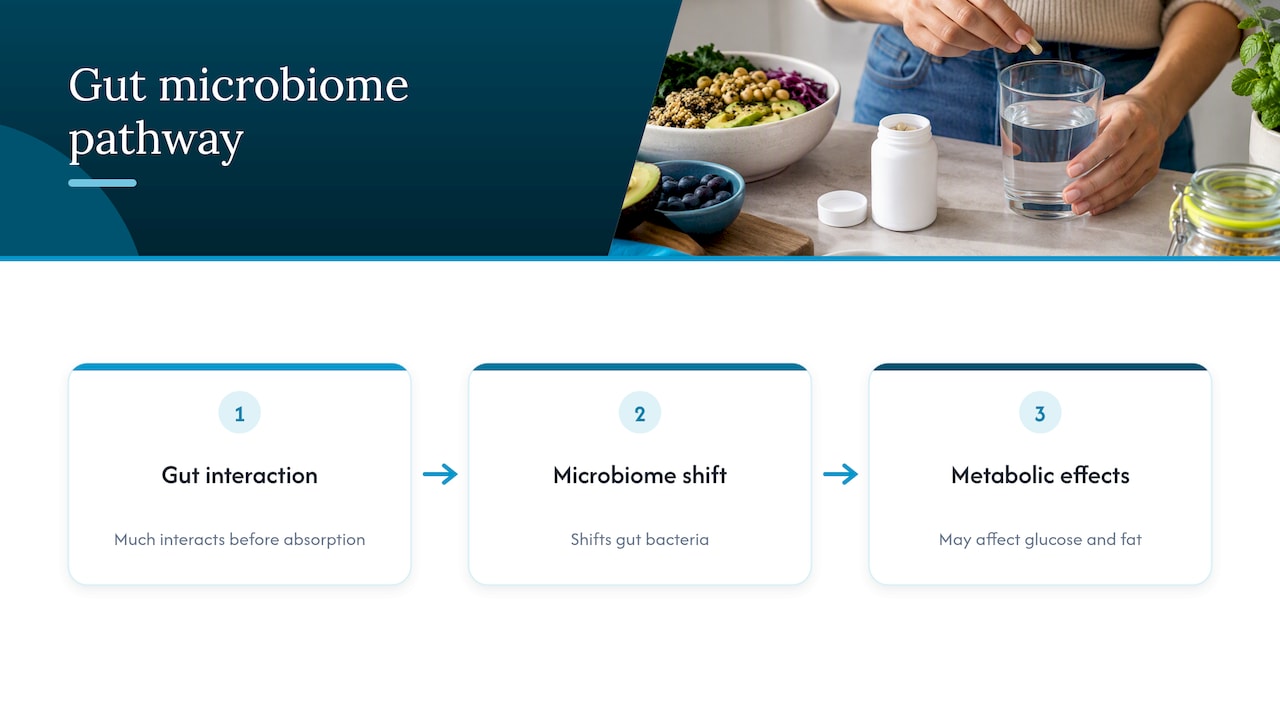
Some of berberine’s metabolic effects appear to run through the gut rather than around it. The comprehensive review of berberine’s pharmacology describes shifts in gut bacterial populations associated with berberine use, part of the mechanistic explanation for its metabolic effects beyond direct enzyme activation.
The general idea: your gut microbiota plays a role in how your body processes glucose and fat, and compounds that shift bacterial composition can indirectly influence those downstream processes. Berberine appears to act partly this way, which may also help explain why its oral bioavailability is low: much of it interacts with the gut environment before whatever is absorbed reaches systemic circulation.
This is also likely connected to the GI side effects covered earlier. A compound active enough to shift bacterial populations is also active enough to cause the cramping, loose stool, or digestive adjustment that shows up commonly in trials. For most people, these effects are temporary as the gut adjusts, but they’re worth expecting rather than being surprised by.
The microbiome angle remains one of the newer threads in berberine research, interesting mechanistically but not yet mapped with the same clinical detail as the glucose and lipid outcomes.
Berberine’s Impact on Mental Health and Cognitive Function
Compared with the glycemic and lipid research, evidence on berberine and cognition or mood is considerably less developed. Most of what’s documented centers on metabolic outcomes: glucose control, lipid changes, liver fat. Claims about mental clarity or cognitive enhancement tied to berberine specifically aren’t supported by the same volume or quality of clinical trial data.
Any plausible link would likely run through the metabolic pathways already discussed. Insulin resistance and metabolic dysfunction are associated with broader health effects throughout the body, so improving glucose control could theoretically have knock-on effects on energy and mental sharpness for some people. That’s a reasonable hypothesis, not a demonstrated outcome.
If you’re drawn to berberine specifically for cognitive or mood support, it’s worth being honest that this isn’t where its evidence base lives. The research strength sits squarely in metabolic health, and treating it as a nootropic or mood supplement would be getting ahead of what trials actually show.
How Berberine Compares to Other Metabolic Health Supplements
Berberine isn’t the only supplement people reach for when managing blood sugar or cholesterol, and it’s worth knowing where it sits relative to other common options.
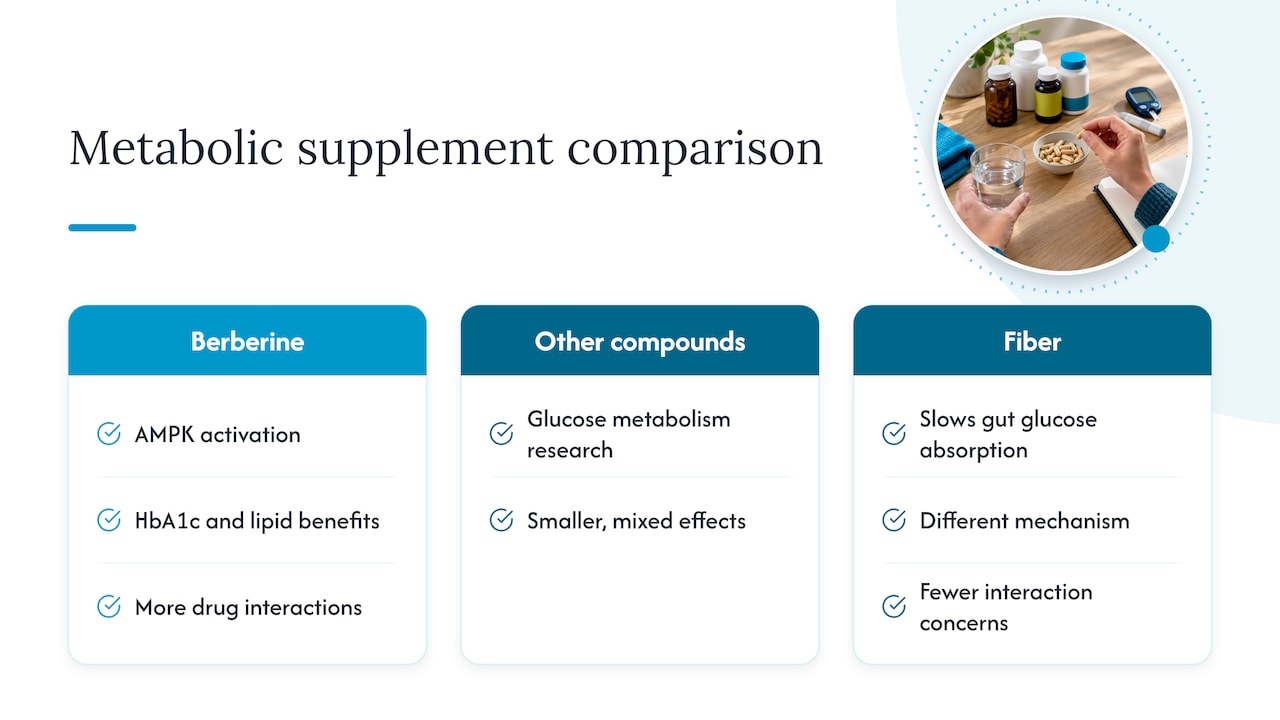
Compounds like chromium, cinnamon extract, and alpha-lipoic acid have their own research threads focused on glucose metabolism, generally with smaller or more mixed effect sizes than what’s been reported for berberine’s HbA1c and lipid outcomes. Fiber-based approaches, such as psyllium, work through a different mechanism entirely, slowing glucose absorption in the gut rather than acting on cellular energy pathways like AMPK.
What sets berberine apart in this category is the combination of a defined mechanism (AMPK activation), a meaningful HbA1c effect size reported in trials, and parallel lipid benefits in the same research base. Few single-ingredient metabolic supplements have that breadth of overlapping evidence. The tradeoff is the interaction profile: because it’s pharmacologically active enough to move the needle on glucose and lipids, it also carries more drug-interaction considerations than something like fiber supplementation.
If you’re building a metabolic health stack, our guide to choosing herbal supplements walks through how different botanicals compare and what to prioritize based on your specific goals.
Fitting Berberine Into a Broader Wellness Plan
Berberine works best as one piece of a larger metabolic strategy, not a replacement for the fundamentals. The trials showing HbA1c and lipid improvements were conducted in people who, in most cases, were also managing diet and activity, not relying on the supplement alone.
A few practical ways to integrate it:
- Pair it with a consistent eating pattern. Since berberine’s glucose effects work alongside your body’s own insulin response, meals that don’t spike blood sugar repeatedly give it less to fight against.
- Keep moving. Exercise independently improves insulin sensitivity through pathways that overlap with some of berberine’s mechanisms, so the two can be complementary rather than redundant.
- Track real markers. Fasting glucose, HbA1c, and a lipid panel at baseline and again after a few months give you actual data instead of guesswork about whether it’s helping you specifically.
Our guide to personalizing your supplement choices can help you think through how berberine fits alongside the rest of your routine, including other supplements you may already be taking.
Long-Term Use: What Sustainability Looks Like
Most of the strongest berberine trials run weeks to a few months, not years, which leaves an open question about what happens with long-term, sustained use. The pattern across meta-analyses, where shorter trials of 90 days or less often show larger lipid changes than longer ones, hints that some effects may shift or plateau over time rather than compound indefinitely.
That doesn’t mean long-term use is unsafe, but it does mean the evidence for sustained benefit is thinner than the evidence for short-to-medium-term improvement. Anyone planning to stay on berberine for an extended period benefits from periodic lab recheck, both to confirm the supplement is still helping and to catch any emerging interaction issues, especially if other medications change over time.
Product consistency also matters for sustainability. Because alkaloid content varies across herbal berberine products, according to reviews raising product-quality concerns, sticking with a third-party-tested product reduces the risk that your long-term results reflect inconsistent dosing rather than the compound itself.
Where the Evidence Is Strong, and Where It Isn’t
Berberine’s blood-sugar and lipid data are the most convincing parts of the story, with effect sizes large enough to matter clinically. The weight and liver-fat findings are real but modest, and the interaction risks are serious enough that this isn’t a supplement to start casually alongside existing medications.
What’s missing is longer, higher-quality trials outside a narrow set of research settings, and more standardized products so the dose you buy matches the dose that was studied. Anyone considering berberine should talk with a clinician first, particularly if they take other medications.
— Derrick
Getting Personalized Support From Celluvive
Deciding whether berberine fits your routine works better with a clearer picture of your own baseline, not a one-size-fits-all recommendation. Our free health assessment and consultation gives you that starting point, helping you think through your current medications, goals, and health history before you add anything new.

From there, our health supplements category lets you explore options with the same personalized context in mind. Members also gain access to ongoing support and wellness initiatives. Sign up for your free assessment today and build your next step on real information instead of guesswork.
This article is general information, not a substitute for advice from a qualified doctor. Consult a qualified healthcare professional about your own circumstances before acting on anything here.
FAQ
What happens when you take berberine every day?
Daily use at common trial doses of 0.9 to 1.5 grams tends to produce gradual improvements in fasting glucose, HbA1c, and some lipid markers over several weeks, according to the 2026 HbA1c meta-analysis. Digestive side effects like loose stool or cramping are the most commonly reported daily experience, especially early on.
What organ is berberine hard on?
The liver is the main organ of concern because berberine inhibits liver enzymes including CYP3A4, CYP2D6, and CYP2C9, which changes how other medications are metabolized, per the narrative review on berberine-drug interactions. This matters most for people already taking medications processed through those same pathways.
What’s the downside of taking berberine?
The main downsides are gastrointestinal side effects like diarrhea and cramping, plus a real risk of drug interactions involving liver enzymes and transporters that affect medications such as cyclosporine and metformin. Pregnant or breastfeeding individuals should avoid it due to documented neonatal bilirubin concerns.
What to avoid while taking berberine?
Avoid combining berberine with medications metabolized by CYP3A4, CYP2D6, or CYP2C9 without clinician guidance, since interaction risk is well documented. It’s also best to stop before scheduled surgery and to avoid use entirely during pregnancy or breastfeeding.