


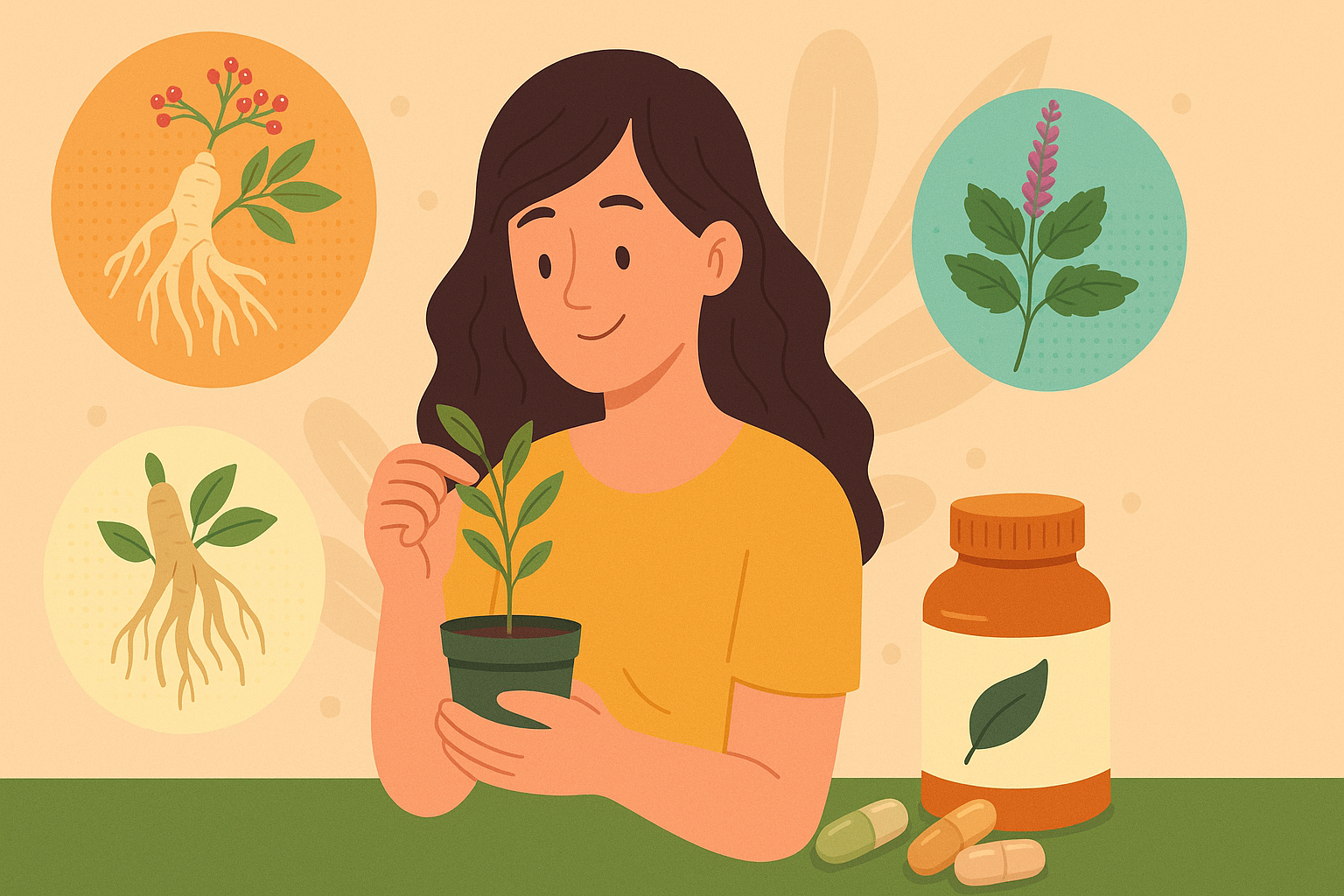
I still remember the first time a client came to me clutching a bottle of ashwagandha like it was a magic wand. She was exhausted, foggy, anxious—and frustrated that the “miracle herb” hadn’t changed her life. Sound familiar?
Adaptogens have become buzzwords in wellness spaces. From mushroom lattes to social media “stress hacks,” you’ve probably seen them everywhere. But here’s the thing no one tells you: just because adaptogens are natural doesn’t mean you can use them carelessly.
In my experience as a holistic health coach, some of the worst outcomes I’ve seen came from good intentions—people grabbing the trendiest blend without understanding how it interacts with their body, their hormones, or even their personality.
So let’s cut through the noise. You deserve more than hype and half-truths. Let me walk you through the biggest mistakes people make with adaptogens and what to do instead.
What Are Adaptogens and Why Your Body Might Be Crying Out for Them
Think of adaptogens as nature’s stress sherpas. These are plant compounds—often herbs, roots, or fungi—that help your body stay balanced under stress, whether it’s emotional, environmental, or physical.
They’re not new. Ancient systems like Ayurveda and Traditional Chinese Medicine have used them for centuries. We’re talking about holy basil, astragalus, schisandra, and more. But it’s only recently that they’ve made their way into Western routines—and shelves at Whole Foods.
So what do they actually do?
In a nutshell, adaptogens help regulate the hypothalamic-pituitary-adrenal (HPA) axis, your body’s command center for stress response. They modulate cortisol—the “fight or flight” hormone—so you can respond to stress more gracefully instead of being hijacked by it.
But don’t mistake them for quick fixes. These herbs are subtle and slow. They help you build resilience over time, not overnight.
I often tell clients, “Adaptogens won’t give you a jolt like caffeine—they give you bandwidth.” The kind of calm focus you didn’t know you were capable of.
Download Your Free Lifestyle Journal
Comprehensive Health & Wellness Journal
| Date | Hours of Sleep | Weight | Water Intake (cups) | Breakfast (food & calories) | Lunch (food & calories) | Dinner (food & calories) | Glucose (before meal) | Glucose (after meal) | Blood Pressure | Steps | Exercise / Activity | Medication / Supplements | Mood | Notes / Reflection |
|---|---|---|---|---|---|---|---|---|---|---|---|---|---|---|
The Most Misunderstood Effects of Adaptogens
Here’s where things go off the rails. People hear “energy,” “balance,” or “calm” and assume adaptogens work like a Red Bull with a halo. That’s not how this works.
Let’s be real: adaptogens are not stimulants. They don’t push you harder—they help your body function better under pressure. That’s a big difference.
I’ve had clients who doubled their dose thinking more = better, only to end up wired, bloated, or even more exhausted. I’ve seen people take ashwagandha expecting it to cure their insomnia, only to feel heavier and sleepier all day.
You also can’t expect one adaptogen to fix everything. Ashwagandha is popular, sure—but it’s not for everyone. And stacking multiple adaptostressgens into one “superblend” can confuse your system rather than support it.
The bottom line? Adaptogens aren’t one-size-fits-all. They’re nuanced. Like tuning a guitar, not flipping a switch.
Why the Wrong Adaptogen Can Actually Make You Feel Worse
Let’s talk about side effects—because yes, they happen.
You might be surprised how many clients come to me feeling “off” after self-prescribing the wrong herb. They’ll say, “I’m more anxious,” or “I’m crashing harder in the afternoon,” and we trace it back to an adaptogen that wasn’t right for their constitution.
For example, rhodiola is energizing. Sounds great, right? Not if you’re already running on adrenaline. For Type A personalities with high cortisol, rhodiola can overstimulate and amplify anxiety.
Ashwagandha is cooling and grounding—but in someone with low thyroid function or heavy fatigue, it can make you feel like you’re moving through molasses. (Source)
Your body has an energetic blueprint. Some herbs are warming, some are cooling, some are drying or moistening. If you don’t match the herb to your state, you’re playing with fire.
I’ve had to walk clients back from the edge of burnout because they were taking trendy blends they saw on TikTok. That’s why guidance matters. And no, Googling symptoms doesn’t count.
How to Match the Right Adaptogen to Your Body Type and Needs
This is where the magic happens—when you stop treating adaptogens like candy and start treating them like tools.
Let’s look at some simple, targeted pairings:
Anxiety or chronic stress?
Try ashwagandha (if you’re not thyroid-sensitive) or reishi mushroom. Both are calming and help regulate cortisol gently over time.
Low energy and brain fog?
Cordyceps or rhodiola might work—especially if your fatigue feels physical, like you’re dragging your body uphill all day.
Detoxification or sluggish liver?
Schisandra and holy basil (tulsi) support gentle detox pathways and balance stress at the same time.
But here’s my best advice: don’t start with a cabinet full of powders. Pick one. Track how you feel over 7–10 days. Less is more when you’re listening to your body.
Better yet, get some functional testing done. If you’re dealing with adrenal dysregulation, thyroid imbalance, or chronic inflammation, those lab markers can tell you which adaptogens to lean toward—and which to avoid.
Personalize Your Wellness Goals With This Tool!
Comprehensive Wellness Assessment
The Dirty Truth About Supplement Quality and Marketing Gimmicks
Let’s not sugarcoat it: the supplement industry is a mess.
Labels may look fancy, but what do they really mean? Most adaptogen supplements are garbage. Sorry, not sorry.
“Proprietary blends” often mean you don’t know how much of anything you’re getting. Maybe 500mg of rhodiola—or maybe 5mg sprinkled in a fairy dust mix with rice flour.
Even worse, many brands skip proper extraction. You need standardized extracts to ensure the active compounds—like withanolides in ashwagandha—are present in therapeutic amounts. (Source)
Don’t even get me started on fillers, artificial flavors, or untested sourcing. If your supplement has magnesium stearate, food coloring, or no 3rd-party testing? Toss it.
That’s why I only recommend medicinal-grade supplements from trusted sources. At Celluvive, we vet every adaptogen for potency, purity, and bioavailability. Because what you put in your body should help you heal—not confuse your system.
The Best Way to Integrate Adaptogens Into Your Wellness Plan
Here’s what I wish more people understood: adaptogens work best when they’re integrated into a routine that honors your nervous system—not punishes it.
You don’t need a 10-step protocol. Keep it simple.
Start with one adaptogen in the morning (like holy basil tea or reishi coffee alternative). Use it as a moment of mindfulness. Set an intention. Sip slowly. That ritual matters more than the dosage sometimes.
Avoid stacking three adaptogens in one smoothie. If you’re trying to calm down, boost energy, and detox all at once—you’re sending mixed signals.
Most importantly, be consistent. These herbs build resilience over time. You don’t “feel” them the way you do caffeine. You realize one day, “Hey, I’m not snapping at people or crashing at 3 p.m.”
Cycle off after 6–8 weeks if you can. Let your body recalibrate. Adaptogens are allies, not crutches.
When to Seek Help: Functional Testing and Holistic Assessment
If you’re struggling with persistent fatigue, poor sleep, mood swings, or hormonal chaos—adaptogens might help, but they’re not the full picture.
You need to zoom out.
Functional lab testing can reveal hidden imbalances:
- High cortisol at night?
- Low DHEA in the morning?
- Subclinical thyroid dysfunction?
- Blood sugar dysregulation?
These markers change everything about how we build your protocol.
At Celluvive Health, we offer a free root-cause consultation. We look at your full health timeline, run comprehensive labs (not the 15-minute urgent care stuff), and tailor your plan to your body—not a trend.
You deserve that level of care. Because healing isn’t just about what you take—it’s about why you’re taking it.
FAQs
Can I take more than one adaptogen at the same time?
Technically yes, but it’s not always smart. Start with one. Observe. Layer slowly if needed.
Are adaptogens safe for long-term use?
In most cases, yes—but cycle off periodically. Your body can build tolerance, and you want to avoid dependence.
Do adaptogens work immediately or take time?
Some effects may appear in days, but true benefits build gradually over weeks.
Can I mix adaptogens with prescription meds?
Not without checking with a healthcare provider. Some herbs can interact with antidepressants, thyroid meds, or blood pressure drugs.
What’s the best time of day to take adaptogens?
Morning or early afternoon works best for most. Avoid energizing adaptogens before bed.
Your Body’s Not Broken—It’s Asking for a Map
Let’s decode your fatigue, brain fog, or hormone chaos together. Book your free Celluvive Health root-cause consultation and start getting real answers—not more confusion.
We only use adaptogens that are tested, pure, and powerful. Because wellness should never feel like guesswork. Through our partnership with Fullscript, you can access thousands of practitioner-only products—backed by science, not hype.
Diagnose 249 Prevalent Chronic Diseases